

Die grundlegenden Verfahren und Häufigkeit der täglichen Wartung einer schwimmenden Fischextrudermaschine sind wie folgt: Es sollte ein standardisiertes Wartungsprotokoll erstellt werden.und Wartung sollte entsprechend der Häufigkeit durchgeführt werden: Erstens, tägliche Wartung: Nach der Produktion die Maschine zum Abkühlen stoppen, die Restrohstoffe in der Extrusionskammer reinigen,und der Zufuhrtrommel des Extruders, um Trocknung und Korrosion von Teilen zu verhindern■ Öl und Staub von der Ausrüstungsoberfläche abwischen, auf Lecks in den Dichtungen achten und Schmieröl auf das angegebene Niveau hinzufügen; die Matrizeöffnung auf Verstopfungen oder Verschleiß prüfen,und es schnell reinigen oder zermahlenZweitens wöchentliche Wartung: Die Extruderschraube und die Lager demontieren, die Oberfläche von Kohlenstoff und Verschleißrückständen reinigen und hochtemperatures Fett hinzufügen;Überprüfung auf lose Verbindungen in Öl- und Dampfleitungen, und die Verbindungen anziehen; die Abkühlschalen vom Kühlsystem reinigen, um die Wärmeabbaueffizienz zu verbessern.die Verschleißmenge messen, und die, die die Norm überschreiten, unverzüglich reparieren oder austauschen; das elektrische Steuerungssystem überprüfen, die Verkabelung auf Staub reinigen und eine genaue Parameterkontrolle gewährleisten.
Die wichtigsten Verschleißteile eines Extruders sind die Schraube, die Matrize, das Öldicht und die Lager.Der Ersatz sollte dem Prinzip der "genauen Auswahl und standardisierten Montage" folgen: Erstens wählen Sie für die Schraube und die Matrize Originalteile aus, die dem Ausrüstungsmodell entsprechen.Nach dem Ersatz, müssen die Parameter angepasst werden, um den Extrusionswirkung zu gewährleisten.Ausgewählte Hochtemperatur- und Ölbeständige Typen (Fluorkautschuk), Temperaturbeständigkeit ≥ 180°C). Beim Austausch ist die Dichtungsrohe zu reinigen, um eine dichte Dichtung zu gewährleisten und Öllecks vor der Kontamination des Einsatzes zu verhindern.Auswahl hochpräziser verschleißfester Lager. Nach dem Austausch die Rotationsflexibilität überprüfen und geeignetes Fett hinzufügen, um einen reibungslosen Schraubbetrieb zu gewährleisten.Konzentrieren Sie sich auf den Austausch der Druckwalze und sterben, um eine schlechte Pellettbildung durch Verschleiß zu vermeiden.
Wichtige Punkte für die Wartung und den Einsatz von Trockenfutterpellet-Verarbeitungsmaschinen: Die Wartung muss dynamisch anhand des Betriebszustands der Anlagen angepasst werden:wenn während des Extruderbetriebs abnormale Geräusche oder erhöhte Vibrationen auftreten, kann ein Verschleiß des Lagers oder eine lose Schraube anzeigen, die unverzüglich abgeschaltet und überprüft werden muss; wenn die Bruchgeschwindigkeit des Futters steigt oder der Extrusionsgrad deutlich schwankt,Es kann auf die Verkleidung des Kopfes hinweisen.Gleichzeitig sollte eine Überlastung der Ausrüstung vermieden werden; die Dauer des kontinuierlichen Betriebs des Extruders darf 8 Stunden nicht überschreiten.mit einem 30-minütigen Kühlstopp dazwischen, um den Verschleiß der Bauteile zu reduzierenDurch ein Modell der "täglichen Wartung + Überwachung des Zustands" kann die Ausfallzeit von Geräten aufgrund von Fehlfunktionen von 8 Stunden pro Monat auf weniger als 2 Stunden reduziert werden.erhebliche Verbesserung der Produktionseffizienz.
Über uns
Kundenbesuch
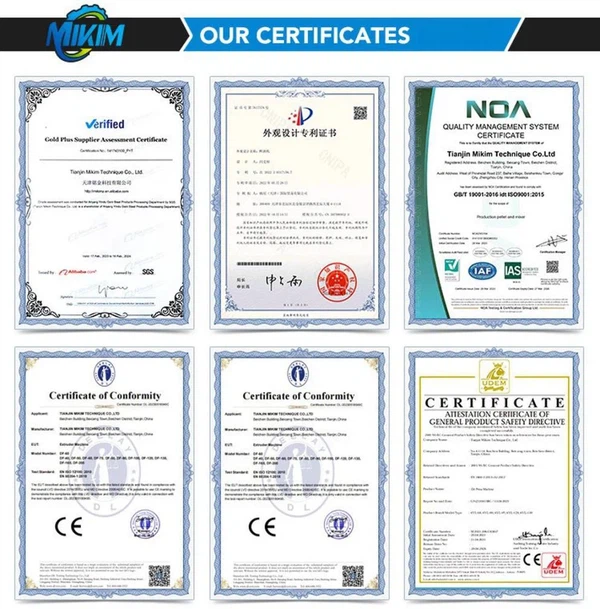
Ehrenzertifikat